
Pest Control & Wildlife Removal in
Local Wildlife Control Expertise
Suwannee River communities and rural Bell, FL neighborhoods face persistent wildlife challenges. Armadillos tear lawns searching for grubs. Raccoons access attics through soffit gaps. Wildlife control service in Bell, FL addresses these animals humanely while protecting your home and foundation. Local expertise means understanding North Florida terrain, seasonal patterns, and state wildlife laws.
Rural properties near Bell require immediate removal and exclusion to prevent recurring damage. This guide covers how we trap, remove, and seal entry points so wildlife stays out for good.
How Wildlife Removal Works
Our process removes animals safely and prevents them from returning to your Bell property.
Inspection
We walk your property to identify entry points, burrows, attic access, and active animal signs. This reveals how they entered and where they hide.
Trapping
We place humane traps at activity spots and check them daily per Florida law. Armadillos, raccoons, and opossums are trapped humanely.
Removal
Once trapped, animals are handled per Florida wildlife regulations. We follow state law for release or humane euthanasia.
Exclusion
We seal all entry points with durable materials. Soffit gaps, foundation cracks, and burrow tunnels are permanently blocked.
Prevention
We advise on food source removal, landscape management, and ongoing monitoring so wildlife does not return.
You'll always know what's happening next—and when.
Our Services
We specialize in the animals most common in Bell and surrounding Gilchrist County areas.
Raccoon Removal
Raccoons live along the Suwannee River and move into rural homes when food is available. They access attics through soffit damage and chimneys, tearing insulation and leaving dangerous droppings.
- Attic and crawl space removal
- Chimney and soffit exclusion
- Drain and vent screening
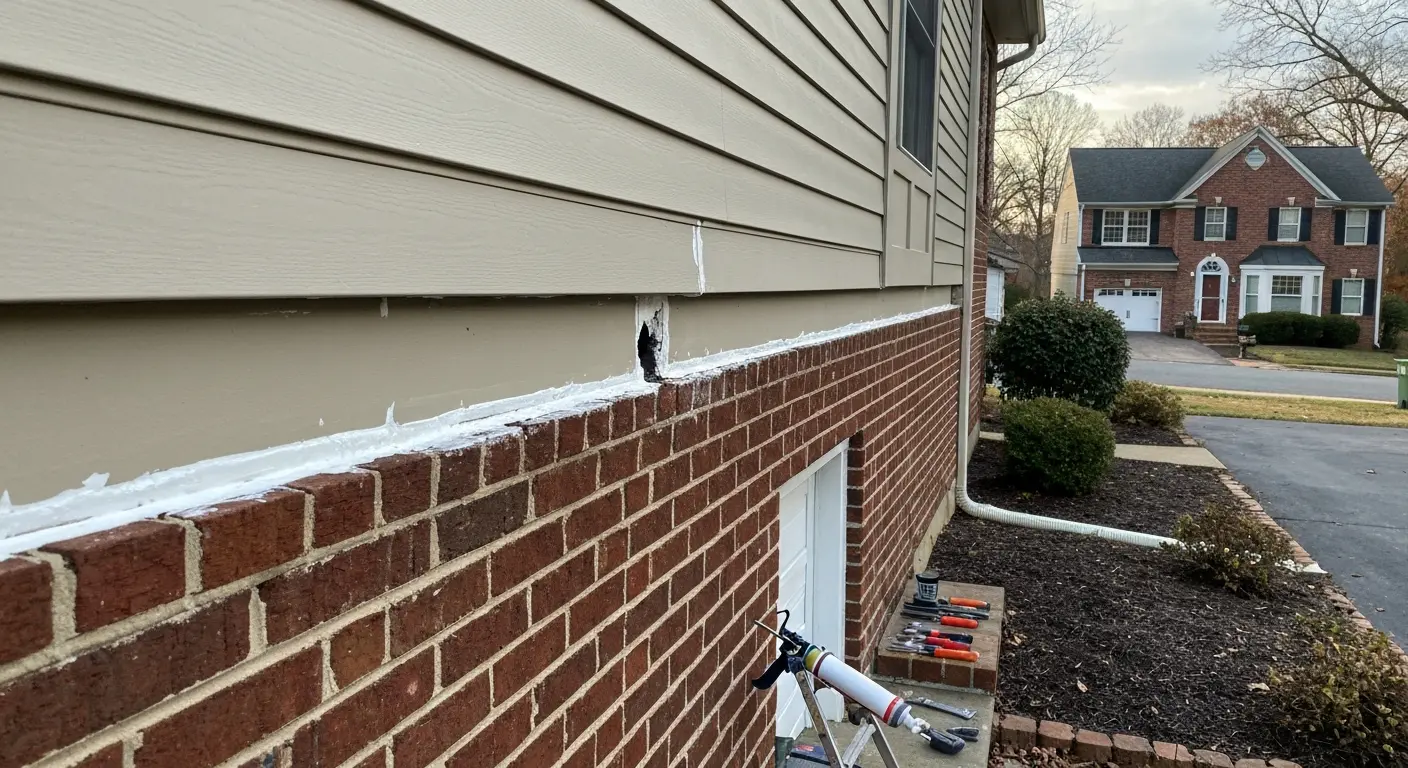
Raccoon access point sealed near Main Street area
Armadillo Trapping
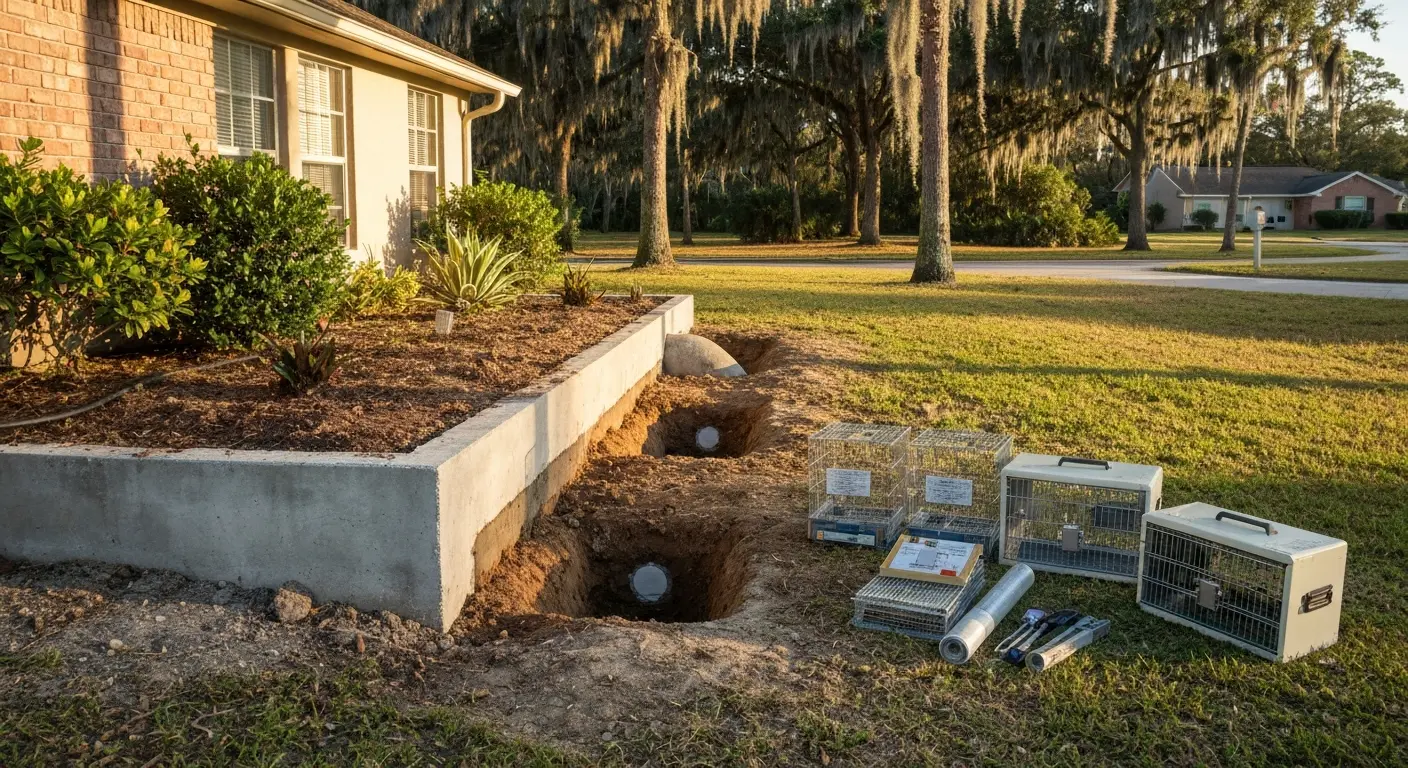
Armadillo burrows near foundation repaired
Armadillos dig deep burrows up to 20 feet long, destabilizing yards and foundations. They forage at night for grubs and insects, leaving holes 3 to 5 inches wide across lawns near Hatchbend and surrounding subdivisions.
- Live trapping at burrow entrances
- Burrow location mapping
- Landscape restoration and hardening
Bat & Snake Removal
Bats roost in attics and chimneys, creating unpleasant odor. Snakes shelter under decking and sheds near water sources. Both require exclusion during legal windows per Florida wildlife law.
- One-way door exclusion (August–winter)
- Snake relocation and prevention
- Attic odor cleanup and sealing
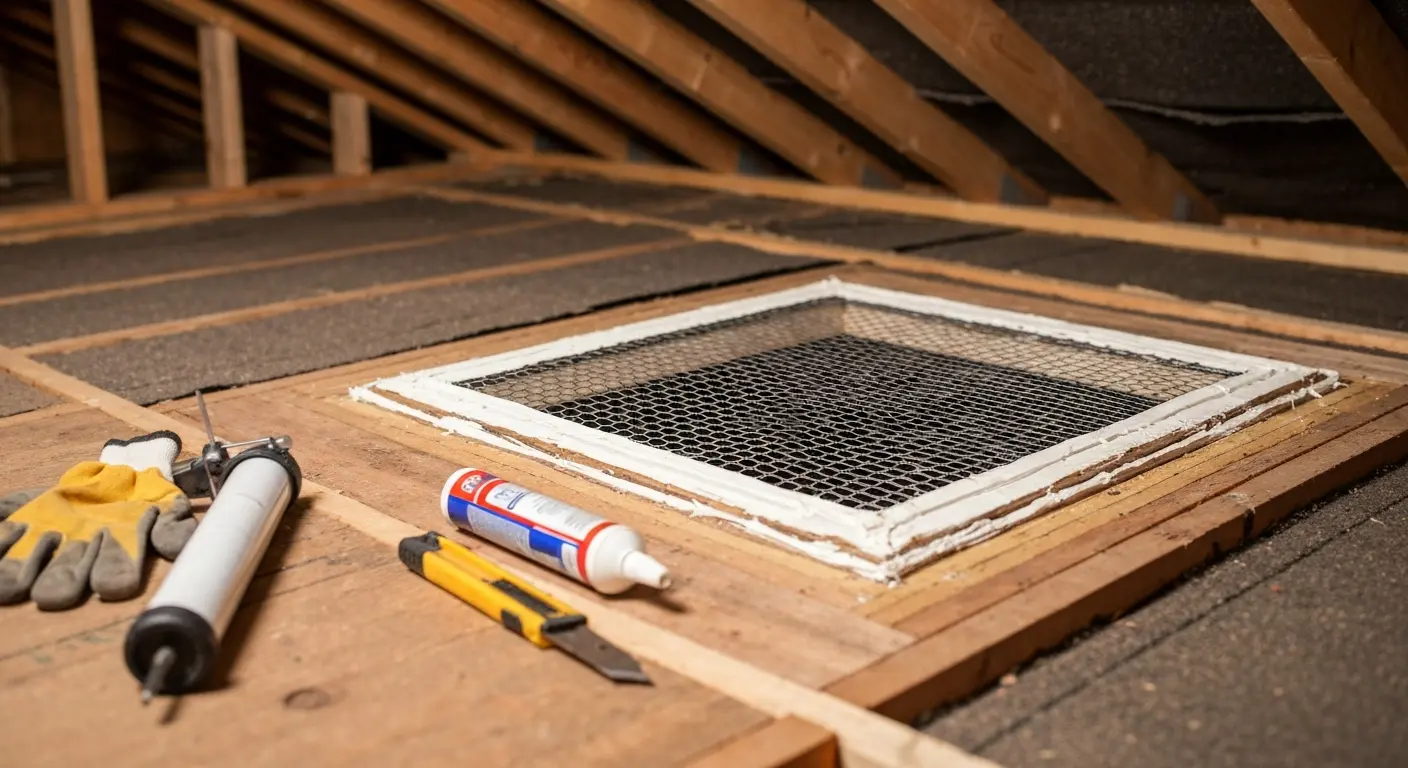
Attic vent sealed for bat and rodent exclusion
Squirrel & Opossum Control
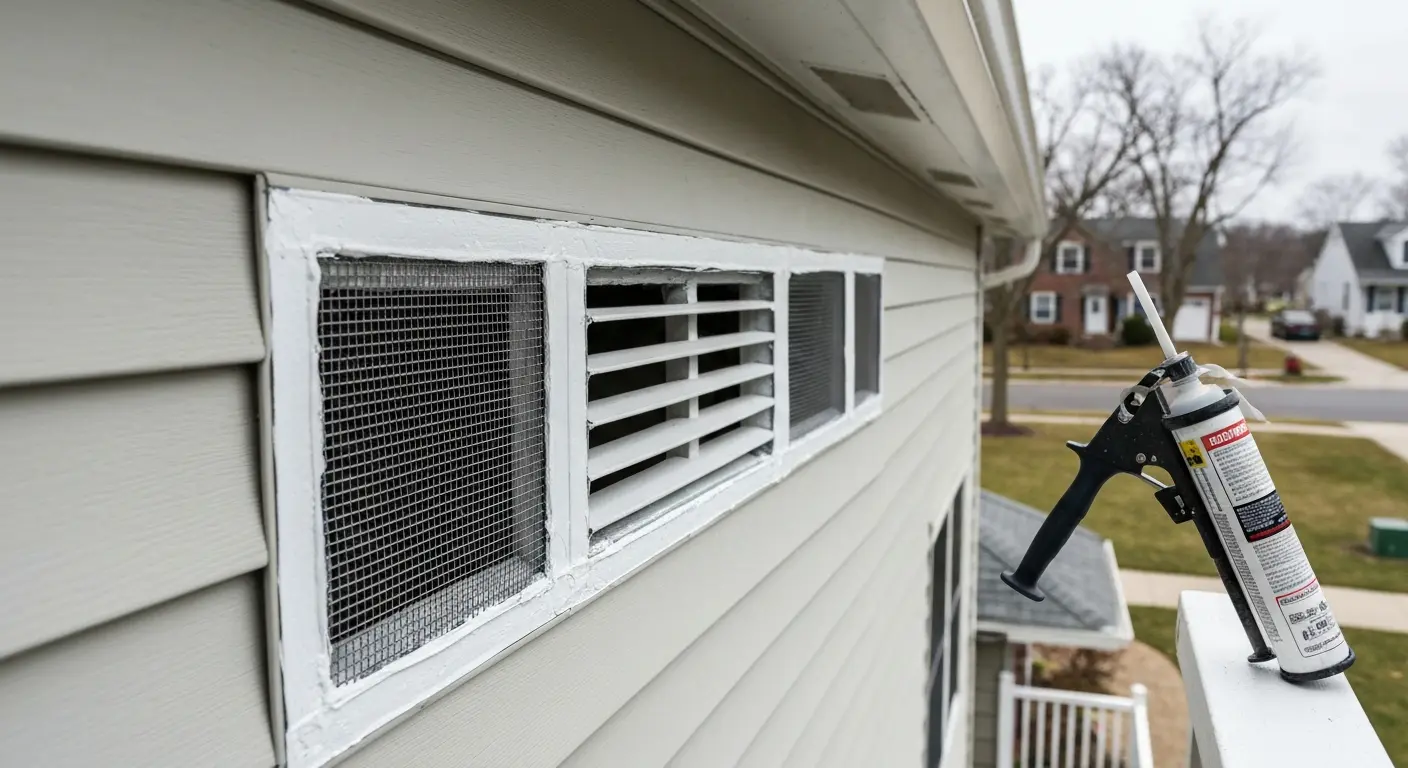
Soffit and gable vents sealed against squirrel entry
Squirrels chew roof edges and electrical wires. Opossums steal pet food and shelter under decks. Rural Bell properties are prime habitat for both species due to nearby forest and brush.
- Roof and eave trapping
- Deck and shed screening
- Electrical wire and attic damage repair
Dead Animal Removal
Dead animals under decks, in attics, and along building foundations create severe odor and health hazards. We locate, remove, and deodorize the area safely. Rural properties near Bell often face delayed discovery due to distance.
Why Local Expertise Matters
Bell sits in North Florida's wildlife corridor. Understanding local terrain and state law is essential.
Gilchrist County properties near rural areas face higher wildlife pressure due to proximity to the Suwannee and Santa Fe Rivers. Exclusion is not optional—it's essential.
Local landscape factors shape animal behavior. River access keeps raccoon populations high year-round. Dense brush and mixed forest near Blitchville provide ideal cover. Warm, wet climate supports year-round breeding, meaning repeat invasions are common without exclusion.
Florida wildlife laws are strict. Trapped animals must be handled per Fish and Wildlife Conservation Commission rules—incorrect release or euthanasia triggers fines. We know the regulations. We stay compliant.
Rural properties also differ from town homes. Open land, multiple outbuildings, and longer setbacks from neighbors mean wildlife has more access points and hiding spots. Comprehensive inspection and exclusion prevent costly repeat calls.
Serving Bell & Gilchrist County
We're based locally and respond to calls throughout the area.
Bell is a small community, but wildlife problems are urgent and complex. We know local roads, landmarks like Log Landing on the Suwannee River, and neighborhood characteristics. Whether you live near the historic restored depot on Main Street or on rural acreage near Wannee, we reach you quickly and work with your property layout.
From Trenton to Newberry, Gainesville to surrounding county areas, we service all of Gilchrist County and beyond. Most properties are rural or semi-rural, meaning wildlife access is easier and prevention is harder. Our experience with rural exclusion and long-term monitoring keeps your investment protected.
Getting Here
Bell is accessible via US 129, which runs north–south through town. State Road 232 connects to the south. Most properties sit 5–15 minutes from town center. We arrive equipped and ready to start on the first visit.
Frequently Asked Questions
Is it legal to trap wildlife myself in Bell, FL?
Florida law allows live trapping on your property, but trapped animals must be handled per FWC rules. Most species require licensed professional handling or face penalties. Improper release violates state law.
What happens to animals after they're trapped?
Native wildlife may be humanely euthanized or released on the same contiguous property where captured, per FWC regulations. We explain options and handle all compliance.
Do I need a permit to exclude animals from my attic?
Exclusion is legal year-round. Bat exclusion requires special timing (August–winter) to avoid trapping babies. We handle all permitting and legal windows.
How deep do armadillo burrows go?
Armadillos dig tunnels 2–3 feet deep and up to 20 feet long. Burrows destabilize foundations and weaken soil. Inspection and trapping at entrances is the most effective solution.
Can wildlife come back after removal?
Yes, if entry points are not sealed. Proper exclusion with durable materials prevents reinfestation. Prevention includes removing food sources and maintaining landscaping.
Why is rural property wildlife removal different?
Rural Bell properties have more entry points, larger perimeters, and proximity to natural habitat. Comprehensive exclusion and ongoing monitoring are essential to prevent repeat invasions.
DISCOVER WHAT OUR CUSTOMERS HAVE TO SAY ABOUT US
REVIEWS
proudly serving these areas
Dixie County, FL
Taylor & Lafayette Counties, FL
Suwannee, Columbia, & Hamilton Counties, FL
Gilchrist County, FL
Levy County, FL
Alachua County, FL
Marion County, FL
Citrus County, FL
READY TO take the next step?
get a free quote TODAY!
QUICK LINKS
our services
service areas
operating HOURS
Mon: 12:00 am - 11:59 pm
Tue: 12:00 am - 11:59 pm
Wed: 12:00 am - 11:59 pm
Thu: 12:00 am - 11:59 pm
Fri: 12:00 am - 11:59 pm
Sat: 12:00 am - 11:59 pm
Sun: 12:00 am - 11:59 pm